
What Are Dental Sealants?
Dental sealants are thin protective coatings applied to the chewing surfaces of the back teeth, primarily the molars and premolars. The deep grooves and fissures on these surfaces are difficult to clean thoroughly with a toothbrush, making them particularly vulnerable to cavity formation. A sealant fills these grooves with a smooth, protective layer that keeps food and bacteria from settling in and starting decay.


Who Benefits from Sealants?
Sealants are most commonly recommended for children and teenagers whose permanent molars have recently come in, as this is when the risk of first cavities is highest. Adults with deep grooves on their back teeth and no existing fillings or decay in those areas can also benefit significantly. At A Cleaner Smile in St. Catharines, we assess whether sealants are appropriate at your regular hygiene appointment and recommend them when they would genuinely help protect your teeth.
What Is the Application Process Like?
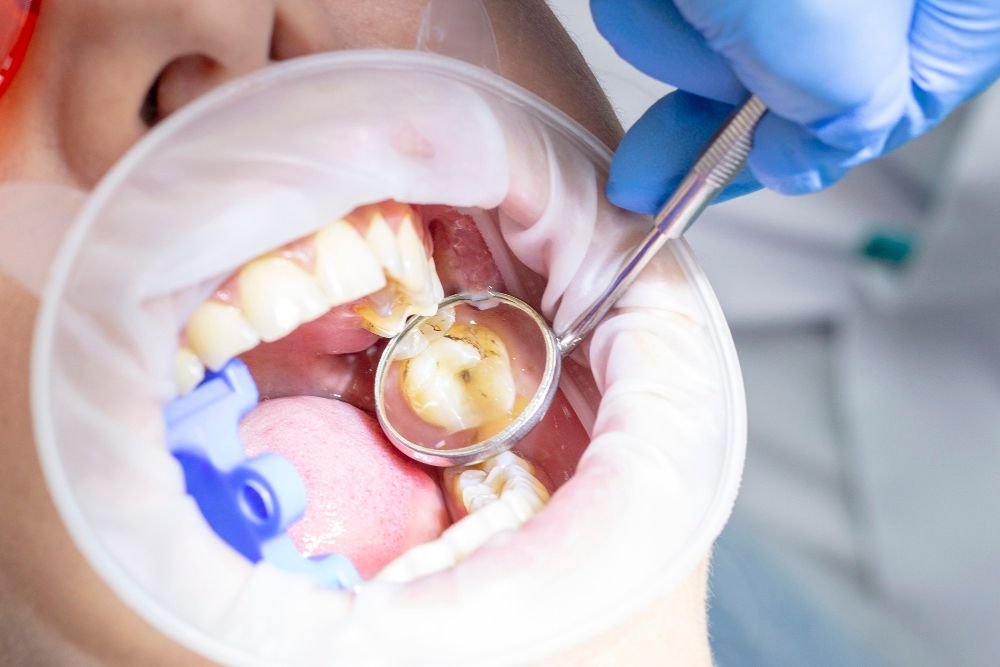
Applying a dental sealant is a quick, comfortable, and non-invasive procedure. The tooth surface is cleaned, prepared with a conditioning solution, and then the sealant material is painted directly onto the grooves of the tooth. A curing light hardens the sealant in place within seconds. The entire process takes only a few minutes per tooth and requires no drilling or anaesthetic. With proper care, sealants can last several years and will be monitored at your regular hygiene appointments.
Patients from Thorold, Niagara-on-the-Lake, Virgil, St. David’s, Beamsville, and other Niagara Region communities visit us in St. Catharines for sealant applications. No referral is needed to book.
Questions About Dental Sealants in St. Catharines
Sealants are most common in children and teenagers, but adults without decay or fillings in the back teeth can also benefit from the added protection they provide.
No. Sealant application is completely painless and does not require any freezing or drilling. It is one of the most comfortable preventive procedures available.
With regular monitoring and good oral hygiene, sealants typically last several years. Your hygienist will check the condition of your sealants at each visit and reapply if needed.